

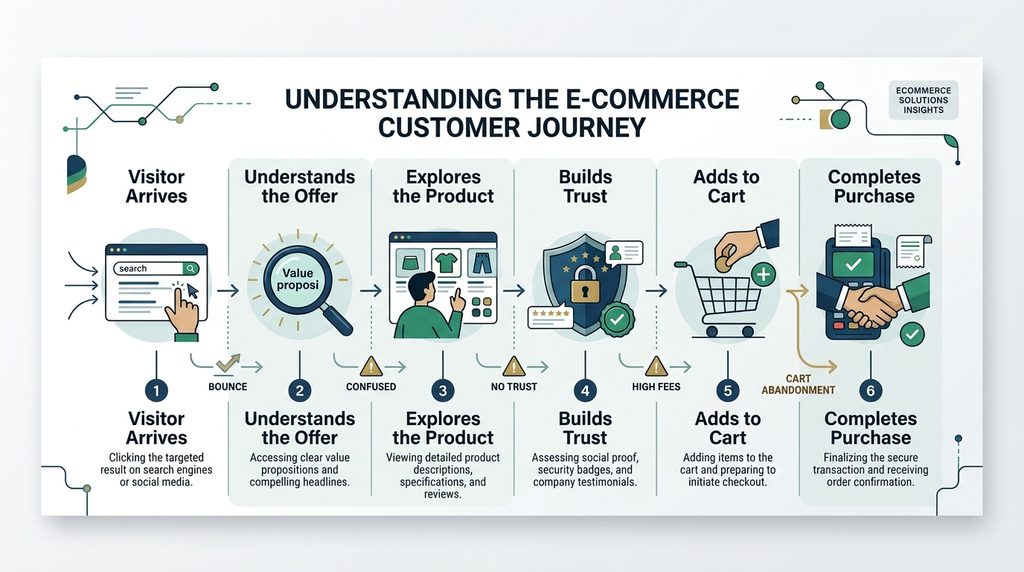
Traffic is often treated as the main measure of ecommerce success, but it’s only one part of the picture. A store can have a steady flow of visitors and still struggle to turn that traffic into revenue. When that happens, it’s easy to assume the answer is simply “get more traffic.” In most cases, that’s the wrong move.
Before spending more on ads or chasing more visitors, it’s worth asking a more useful question: why aren’t the people already showing up buying anything? Somewhere between a visitor landing on the store and completing a purchase, something is breaking down.
More traffic is not always the answer. First, you need to understand why existing visitors are not buying. The rest of this article walks through the most common reasons a Shopify store gets visitors but not sales, and how to figure out which one applies to you.
Are You Getting the Right Kind of Traffic?
Not all traffic carries the same intent. Someone who searches “buy wireless earbuds” is in a very different mindset than someone who searches “how do noise-cancelling headphones work” or someone who clicks a social ad out of curiosity. The first group is close to a purchase decision. The other two may be months away, or may never buy at all.
A Shopify store can show healthy visitor numbers while still converting poorly, simply because the traffic doesn’t match the product. For example, a store selling premium skincare that runs broad interest-based ads may pull in a large volume of visitors who were never shopping for skincare in the first place — they just fit a general demographic. The traffic looks good on paper, but it was never qualified to buy.
This is why it’s worth reviewing where visitors are coming from and how closely that source matches the actual offer. A smaller number of visitors who are actively looking for what you sell will almost always outperform a larger number of visitors who happened to land on the page.
Your Store May Be Making It Too Hard to Understand What You Sell
Clarity is one of the most underrated factors in ecommerce. Within a few seconds of arriving, a visitor should be able to understand what the product is, who it’s for, what problem it solves or benefit it offers, and why it’s worth considering over other options.
When a store leans too heavily on stylish visuals, vague taglines, or clever branding without backing it up with clear explanation, visitors are left to guess. Most won’t take the time to figure it out — they’ll simply leave. This isn’t about dumbing down a brand’s voice; it’s about making sure the message underneath the design is easy to grasp.
A visitor shouldn’t have to work to understand why they should buy. If they have to dig for that answer, most will move on before they find it.
Your Product Pages May Not Be Giving Shoppers Enough Confidence
By the time someone reaches a product page, they’ve already shown interest. This is where that interest either turns into a decision to buy or stalls out. What a shopper needs to see here depends heavily on the product itself.
Generally, product pages benefit from clear images, useful descriptions, transparent pricing, relevant specifications, shipping details, return policies, and some form of social proof like reviews or common questions answered up front. But the goal isn’t to pile on more content — it’s to answer the specific questions a buyer of that particular product is likely to have.
A $20 accessory doesn’t need the same depth of information as a $500 piece of equipment. The lower-priced item usually just needs enough to confirm it’s exactly what the shopper expects. The higher-priced item needs to address hesitation, comparison, and risk. In both cases, the underlying goal is the same: a good product page should reduce uncertainty, not overwhelm the shopper with information they don’t need.
Your Mobile Experience Could Be Losing Sales
A large share of ecommerce traffic now comes from phones, which means the mobile version of a store often carries more weight than the desktop version — even if desktop gets more attention during development.
Common mobile issues include navigation that’s difficult to use with one thumb, text that’s too small to read comfortably, images that don’t load properly, important details buried below the fold, buttons that are hard to tap accurately, intrusive pop-ups, and slow page speed. Any one of these can quietly push a shopper away before they’ve had a real chance to consider the product.
The most reliable way to catch these issues is to browse the store on an actual phone the way a real shopper would, rather than relying on how it looks in a desktop preview. That said, mobile optimization isn’t a fix on its own — it removes friction, but it works best when the product and offer underneath are already solid.
Your Store May Not Be Building Enough Trust
Picture landing on a store you’ve never heard of before. Before spending money, most people run through a quiet mental checklist: Is this business legitimate? Will my order actually arrive? What happens if something goes wrong? Can I trust what this product claims to do?
Trust is built through small, consistent signals — clear contact information, transparent shipping and return policies, professional presentation, genuine customer reviews, a secure checkout process, and branding that feels consistent across the site. None of these on their own guarantee a sale, but their absence can quietly raise doubt.
It’s also worth noting that trust can be damaged just as easily as it’s built. Fake-looking reviews, inflated claims, or promises that feel too good to be true tend to have the opposite effect — they make shoppers more cautious, not less.
A Weak Offer Can Make a Good Store Look Broken
It’s worth being honest about something many store owners overlook: sometimes the website isn’t the actual problem. The product, its pricing, its positioning, or the competitive landscape might be the real issue — and no amount of design polish will fix that.
A well-built Shopify store cannot make an uncompetitive offer attractive on its own. It’s worth asking a few direct questions: Is the price reasonable for what’s being offered? Is the product clearly differentiated from alternatives? Does the offer genuinely match what the target customer is looking for? Is there a real reason for someone to buy now rather than wait?
Store optimization is valuable, but it shouldn’t be used as a way to paper over a product that doesn’t yet have a strong fit with its market.
Checkout Friction Can Turn Interested Shoppers Into Lost Sales
Someone who adds a product to their cart has already shown stronger buying intent than someone browsing the homepage. Losing that person at checkout is often more costly than losing someone earlier in the journey, because they were genuinely close to buying.
Typical checkout problems include unexpected extra costs appearing late in the process, a checkout flow with too many steps, limited payment options, unclear shipping timelines, a lack of trust signals at the payment stage, technical errors, or being forced to create an account before completing a purchase. Rather than assuming the whole store needs an overhaul, it’s worth looking specifically at where in the checkout process people are dropping off.
How to Find the Real Reason Your Shopify Store Is Not Converting
Instead of jumping straight into a redesign, it helps to investigate the problem methodically:
- Check where your traffic is actually coming from.
- Look at which pages visitors spend time on.
- Compare behavior between desktop and mobile visitors.
- Examine how visitors engage with product pages.
- Look at how many visitors add items to their cart.
- Review where checkout abandonment happens.
- Read through customer feedback and support questions for recurring themes.
- Test changes one at a time so you know what’s actually working.
The goal isn’t to fix everything at once. It’s to find the actual bottleneck before spending time and money on changes that may not address the real issue.
Final Thoughts
A Shopify store that gets traffic but not enough sales doesn’t necessarily need more visitors. The real issue is often somewhere else entirely — traffic quality, offer clarity, product page confidence, mobile experience, trust, pricing, product-market fit, or friction at checkout.
The first step is figuring out where the customer journey is actually breaking down, rather than guessing.
FATISCO STACK INDUSTRIES helps ecommerce businesses and Shopify merchants identify and improve issues across their digital experiences, from store presentation and customer experience to conversion-focused improvements and broader ecommerce solutions.